Investigating tree symptoms
Tree Disease Diagnosis in Sudbury
Tree disease diagnosis in Sudbury investigates leaf changes, dieback and other symptoms before you decide what care may be appropriate. Diagnosis aims to understand the problem before a treatment or removal decision is made.
Investigating tree symptoms
Record symptoms of tree decline
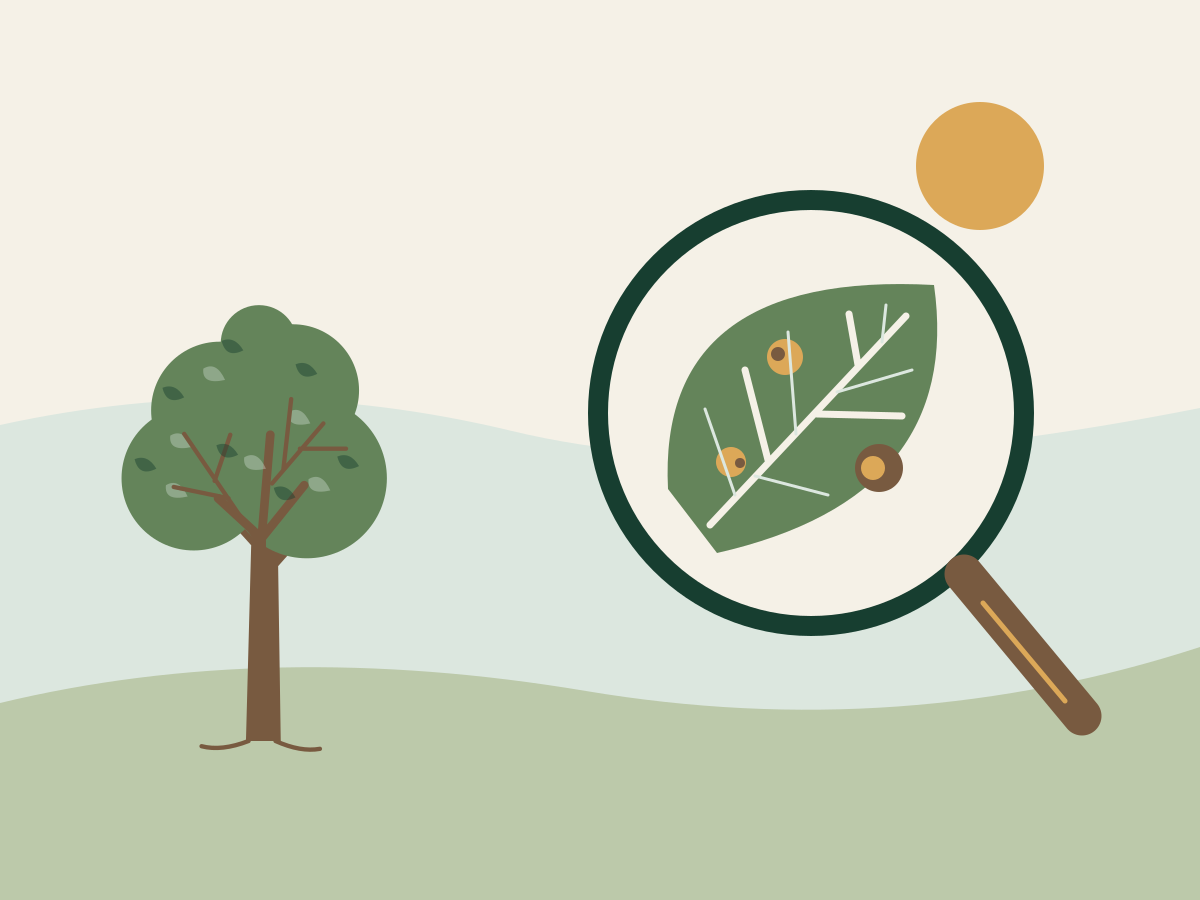
Record the pattern: one branch or the whole tree, a sudden change or a gradual decline, and the time of year. Safe photographs of the whole tree as well as visible symptoms can be useful. Do not remove bark, climb or disturb unstable growth to investigate.
Investigating tree symptoms
Disease, damage or growing conditions
Disease is one possible cause, but physical damage and changes in growing conditions can produce similar concerns. Nearby works or altered ground conditions may be relevant. Explaining the history helps avoid treating a visible symptom as proof of a particular infection.
Investigating tree symptoms
What tree diagnosis may involve
Tree diagnosis brings together the pattern of symptoms, their history and conditions around the tree to investigate possible causes. Inspection may identify an explanation or show that further testing or specialist investigation is needed. Not every case produces a definite diagnosis at the first visit. The findings should distinguish what is known from what remains uncertain and explain the next investigation or management step.
Investigating tree symptoms
Use diagnosis to plan tree care
Once the findings are understood, a care plan can address suitable management or monitoring. Structural concerns may also need a safety-focused assessment. Keep these decisions linked to the findings rather than assuming that every fungal growth or early leaf loss means the tree must go.
Investigating tree symptoms
Get a quote for diagnosis
Include a timeline of symptoms and recent changes around the tree, plus any previous diagnosis or treatment.
Get a quotePractical service questions
Tree Disease Diagnosis Questions
Can a tree disease be identified from photographs?
Sometimes an initial view is possible, but a firm diagnosis may need inspection or testing. Send dates with photographs so seasonal changes are not confused with continuing decline.
Does fungus always mean removal?
No. Photograph its position only if safe and leave it undisturbed for assessment. Its identity and relationship to the tree matter more than its presence alone.
What if the cause is not a disease?
Management should address the identified cause. Ask which action follows from the findings and whether further investigation is needed before paying for treatment described as disease control.